Services
Blog
Why Strategic Training is Essential for Saudi Government Transformation
Book a demo and experience how a branded Coursinity Academy can elevate your training.

Time to Read
6 Min
Published on
Government transformation in Saudi Arabia is no longer a distant goal; it’s happening now! From expanding digital services to reshaping public policy, ministries across the Kingdom are moving forward with purpose. But even with the best strategies and technologies, one thing remains true: real progress depends on people.
A well-prepared workforce is the backbone of any successful reform. Technical skills are important, but they’re not enough. Vision 2030 demands something more focused; training that is intentional, goal-driven, and aligned with national priorities.
This is where strategic training plays a vital role. It’s not just about learning new skills. It’s about building capabilities that drive change, support leadership, and deliver measurable results.
In this article, we explore why strategic training is essential to public sector transformation, what makes it effective, and how Saudi institutions can implement it to shape lasting impact. Keep reading.
Understanding Strategic Training vs. Ad-Hoc Learning
Strategic training refers to learning programs designed with long-term goals that are tied directly to institutional strategy, cultural values, and measurable outcomes. This differs from ad-hoc workshops, which may address short-term needs but lack sustainable impact.
Such training supports Vision 2030 priorities, including digital government transformation, workforce localization (Saudization), and enhanced citizen services. It helps create leadership pipelines that are capable of guiding large-scale change and building future-ready institutions.
Core Benefits of Strategic Training
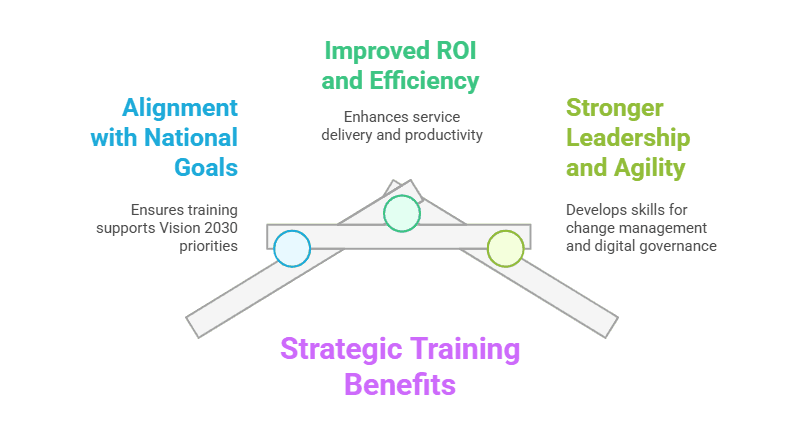
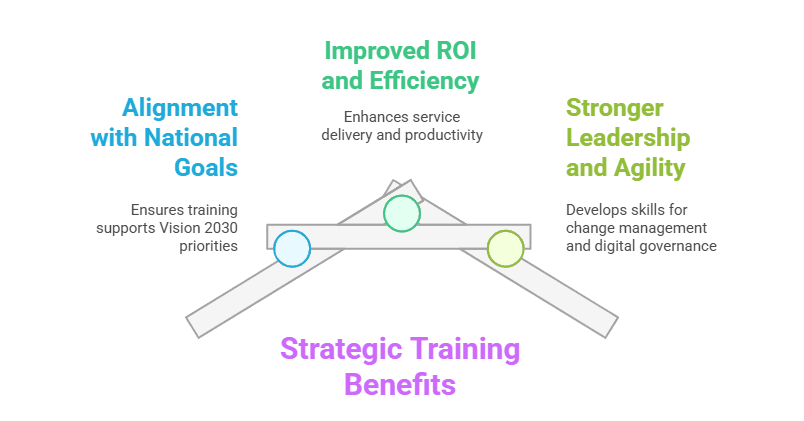
Strategic training is more than a professional development tool. It’s a national necessity, especially in a fast-changing public sector where results matter. When thoughtfully designed and aligned with long-term objectives, strategic training delivers measurable impact across institutions. Here are three core benefits that make it essential for Saudi Arabia’s government transformation:
1. Alignment with National Transformation Goals
Strategic training ensures that employee development is not random or reactive. It is carefully aligned with Vision 2030 priorities such as Saudization, digital transformation, and service excellence. Programs led by entities like the Human Resources Development Fund (HRDF) are built to equip the public sector workforce with skills that directly support national objectives.
2. Improved ROI and Operational Efficiency
In an era of increased fiscal accountability, public institutions are expected to show real returns on every investment, including training. Strategic learning programs help connect workforce development to key performance metrics like faster service delivery, improved citizen satisfaction, and higher productivity. This creates a clear business case for ongoing investment in training.
3. Stronger Leadership and Organizational Agility
Government leadership is no longer about managing the status quo. It’s about guiding change, solving complex problems, and inspiring teams through uncertainty. Strategic training builds these capabilities by focusing on real-world challenges. Programs like “Strategic Leadership for Vision 2030” are designed to strengthen skills in digital governance, change management, and results-driven planning, preparing leaders at all levels to navigate the demands of transformation.
What Makes an Effective Strategic Training Framework
To drive meaningful transformation, training programs must be more than informative. They need to be intentional, targeted, and results-driven. An effective strategic training framework supports long-term institutional goals and helps build a skilled, resilient workforce. These are the essential elements that define success:
Needs Assessment and Gap Analysis
The process starts with understanding where your workforce stands today. By evaluating existing skills and identifying gaps, ministries can prioritize the capabilities needed for current and future roles. This ensures every training investment directly supports transformation goals.
Curriculum Aligned with Transformation Objectives
Training content should reflect the strategic direction of Saudi Arabia’s Vision 2030. Focus areas include digital literacy, sustainable development practices, policy design, and citizen-centered service delivery. When content is tailored to real institutional needs, it becomes more impactful.
Flexible and Inclusive Learning Methods
Public sector employees have diverse schedules, roles, and responsibilities. Offering a mix of learning formats, such as in-person workshops, virtual sessions, microlearning, and mentorship, helps improve accessibility, engagement, and long-term retention.
Performance Metrics and Continuous Feedback
Tracking training outcomes is vital. Use key performance indicators that reflect improvements in staff performance, operational efficiency, and public satisfaction. Regular feedback from participants allows for ongoing refinement and ensures the training remains relevant.
Active Leadership Engagement
When leaders take part in training, they demonstrate its value to the entire organization. Their involvement encourages accountability, promotes culture change, and reinforces the importance of continuous learning at every level.
Why Saudi Arabia Needs Strategic Training Now
Strategic training is a national imperative that supports the Kingdom’s transformation efforts from the inside out. As Saudi Arabia moves deeper into Vision 2030 implementation, several factors highlight the urgent need for more focused, results-driven learning across the public sector.
Support from National Institutions
Key entities such as the Human Resources Development Fund (HRDF) and the Technical and Vocational Training Corporation (TVTC) are actively driving training initiatives. Their frameworks are closely aligned with Vision 2030, offering ministries access to specialized programs designed to meet sector-specific challenges.
Growing Demand for Digital and Strategic Skills
With the rapid expansion of e-government services and digital transformation initiatives, ministries require a new level of expertise. Reports by organizations like PwC emphasize the need for upskilled public sector teams that can manage complex technologies, streamline services, and implement data-driven decision-making.
Ongoing Workforce Readiness Gaps
Despite progress, many government agencies still face challenges in equipping their teams with cross-functional skills. This is especially true in regional and remote offices where access to consistent training remains limited. Bridging this gap is essential to ensure national strategies are delivered at every level.
Rising Expectations for Accountability and Impact
Citizens increasingly expect responsive, transparent, and high-quality services. Strategic training helps public employees meet these expectations by strengthening service delivery, policy implementation, and institutional performance. It equips staff with the tools they need to deliver meaningful results that can be tracked and measured.
How Coursinity Enables Strategic Training
At Coursinity, we take a tailored approach to strategic workforce development. Our public sector solutions include:
Strategic assessments to identify ministry-specific training priorities
- Custom program design aligned with Vision 2030 themes
- Blended delivery that includes digital, in-person, and peer-based learning
- Coaching for leaders and teams to reinforce learning in action
- Analytics dashboards to track impact, engagement, and ROI
We collaborate closely with HR departments and senior decision-makers to ensure training programs contribute directly to institutional goals. Visit our website to learn how we can help your organization shape the future.
Key Takeaways
- Strategic training builds long-term capability rather than offering temporary fixes
- It supports Saudi Arabia’s Vision 2030 by aligning workforce skills with government transformation goals
- Effective training includes needs assessment, flexible delivery, performance tracking, and leadership involvement
- Saudi ministries need strategic learning frameworks now more than ever to drive efficiency, innovation, and service quality
Coursinity offers a full-service model to design and implement strategic public sector training
Frequently Asked Questions
Q: How do we know if training is truly strategic?
A: It is strategic if it is tied to institutional goals, performance indicators, and long-term talent development, not just short-term learning events.
Q: Which roles benefit most from strategic training?
A: Mid-level and senior managers, transformation teams, and policy leads, especially those responsible for digital or citizen-facing programs.
Q: How can training impact be tracked effectively?
A: Through digital dashboards and KPIs that measure completion rates, service metrics, feedback scores, and task performance improvements.
Q: What are the key benefits of strategic training for government employees?
It enhances leadership capacity, supports change management, aligns employee performance with national goals, improves service delivery, and boosts workforce readiness for Vision 2030.
Q: Can outside providers like Coursinity really support government transformation?
A: Yes. Coursinity offers culturally adapted, data-informed, and goal-aligned training programs with ongoing support and measurable outcomes.
Share this post
Latest Posts

Blog
Employee training programs in Saudi Arabia compared by price, results, and ROI. Discover the best option for your organization today.
6 Min Read

Article
Saudi Arabia’s private sector in 2026 is moving fast, but not gently. It is being pulled in two directions at once: compliance pressure on one side, and massive Vision 2030 growth on the other. If you run a private company in the Kingdom, training is no longer a nice extra. It is the engine under the hood
7 Min Read

Article
When you’re browsing a training catalog, most courses look like they belong to the same family: expert trainer, polished slides, neat agenda, certificate at the end. But the real difference often shows up later when your employee tries to use that certificate in a tender, a professional license renewal, or a government support program… and suddenly, the paper in hand is not enough. So, which one should you choose: accredited courses or non-accredited courses?
7 Min Read