Services
Blog
Training New Employees? Ready-to-Use Program Model
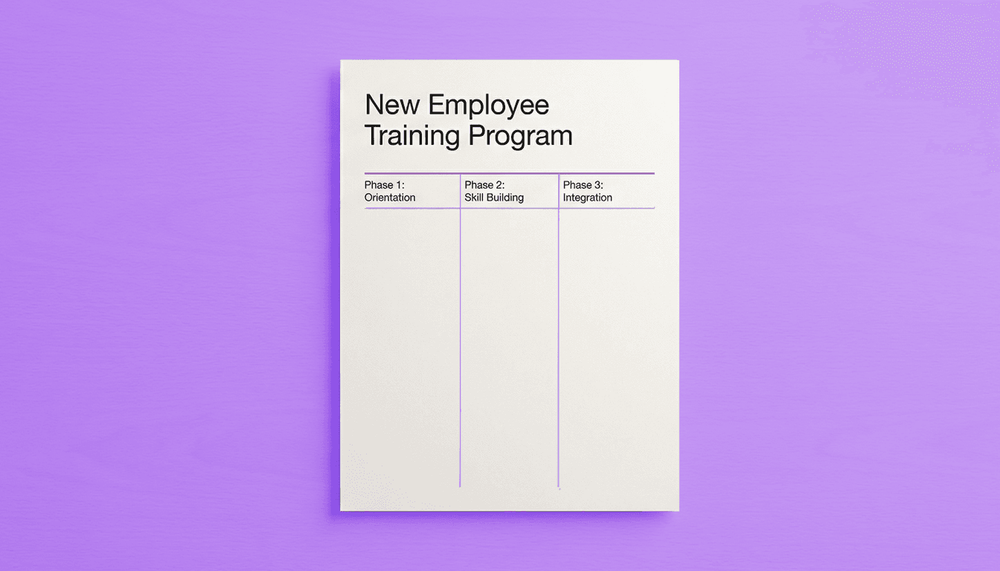
Employee onboarding and training is not an HR formality. It is a business-critical capability that directly influences productivity, compliance, retention, culture, and long-term organizational performance. In today’s competitive environment, companies that treat onboarding as a strategic investment—not a procedural task—gain a measurable advantage from day one.
Time to Read
7 Min
Published on
When new employees receive a structured, role-aligned, and compliant training experience, they integrate faster, perform with greater confidence, and contribute to the organization more effectively. According to McKinsey & Company, organizations with clear and structured onboarding programs can achieve up to 25% faster productivity and lower turnover rates. That is not a minor improvement—it is a substantial operational gain with direct business value.
This article explains why employee onboarding and training matter, how to build a practical framework, how the model aligns with Saudi Vision 2030, and why customization is essential for real-world results.
Why Employee Onboarding and Training Is a Strategic Business Priority
New hires do not become high performers by accident. Without a structured onboarding and training process, they are left to interpret policies, systems, expectations, and workflows on their own. As a result, adaptation slows, errors increase, and valuable time is lost before meaningful output begins.
A strong employee onboarding program does much more than welcome new hires. It creates alignment, reduces uncertainty, and builds operational readiness. This means the organization is not simply filling a seat—it is activating talent.
The strategic impact is clear:
- Faster integration into the company’s mission, values, and culture
- Lower operational errors and fewer avoidable mistakes
- Stronger compliance from the first day of employment
- Better employee confidence and job clarity
- Improved employer brand through professionalism and structure
OECD reports also affirm that organizations investing in onboarding from the hiring stage tend to achieve stronger workforce stability and better corporate governance. In practical terms, better onboarding supports better business performance.
“Onboarding is not the beginning of training. It is the beginning of performance.”
The Real Cost of Weak Onboarding
Many businesses underestimate how expensive weak onboarding can be. The problem is not always visible immediately, but its effects compound quickly. When new hires are not properly guided, managers spend more time correcting errors, teams experience inconsistency, and compliance risks rise.
Poor onboarding often leads to:
- Slower time-to-productivity
- Lower engagement during the first 90 days
- Higher early turnover
- Reduced confidence in leadership and systems
- Inconsistent execution across departments
For organizations that rely on precision, governance, or service quality, these gaps can become costly. In regulated industries such as finance, healthcare, government, and education, inadequate training can also create legal and reputational exposure.
This is why onboarding and training should be treated as a performance system, not an administrative checklist.
Training New Employees and Saudi Vision 2030
Saudi Vision 2030 places human capital development at the center of national transformation. That makes employee training more than a corporate initiative—it becomes part of a broader economic and social priority.
Government bodies, including the Ministry of Human Resources and Social Development, have emphasized several key objectives:
- Improving workforce efficiency, especially among Saudi nationals
- Building sustainable training systems in private sector organizations
- Encouraging public-private partnerships for meaningful development
- Strengthening workforce readiness and employability across industries
This alignment matters because training is a direct enabler of competitiveness. When companies develop people systematically, they contribute to national workforce maturity, talent retention, and innovation readiness.
For organizations operating in Saudi Arabia, onboarding and training is therefore not only about internal performance. It is also about contributing to a larger strategic agenda.
A Ready-to-Implement Training Framework for New Employees
A successful onboarding and training model should be structured, adaptable, and measurable. It should guide new employees from orientation to competence, and from competence to sustained performance.
The following phased model is designed to be practical, scalable, and easy to customize across industries.
Phase 1: Onboarding and Orientation
Duration: 3–5 days
This phase creates the foundation. It introduces the new hire to the organization and helps them understand where they fit within the business.
Key objectives include:
- Introducing the company mission, vision, and values
- Explaining the organizational structure
- Reviewing internal policies and workplace expectations
- Demonstrating essential tools, systems, and communication channels
This stage should make the employee feel welcomed, informed, and connected. It is where culture begins to take shape.
Phase 2: Role-Specific Training
Duration: 2–4 weeks
This is where capability is built. The employee moves from orientation into practical readiness through a combination of instruction, observation, and supervised application.
Key objectives include:
- Teaching job-specific responsibilities and workflows
- Training on software, systems, and technical tools
- Combining theory with hands-on practice
- Setting measurable performance expectations
This phase helps the employee progress from “new hire” to “productive contributor” with greater confidence and less supervision.
Phase 3: Compliance and Governance
Duration: 1 week
This phase is essential, especially in sectors where mistakes can affect safety, privacy, regulation, or financial integrity.
Key objectives include:
- Presenting relevant industry regulations
- Training on ethics, corporate governance, and conduct
- Explaining legal responsibilities and compliance requirements
- Reinforcing data protection and policy adherence
For organizations in high-regulation environments, this stage protects both the business and its stakeholders.
Phase 4: Evaluation and Continuous Support
Duration: First 90 days and ongoing
Training does not end after orientation. The first 90 days are critical for measuring real-world understanding, identifying gaps, and supporting continuous improvement.
Key objectives include:
- Reviewing performance in actual job conditions
- Identifying skill gaps early
- Providing extra coaching or refresher training
- Building a learning culture that supports growth
This phase ensures onboarding produces sustained performance—not temporary awareness.
Comparison Table: Training Program Overview
A clear comparison makes the framework easier to visualize and apply.
| Phase | Duration | Main Focus |
|---|---|---|
| Onboarding & Orientation | 3–5 days | Company introduction, policies, tools, mission, and vision |
| Role-Specific Training | 2–4 weeks | Job skills, systems training, supervised practice |
| Compliance & Governance | 1 week | Regulations, ethics, and legal responsibilities |
| Evaluation & Continuous Support | 90 days ongoing | Performance reviews, coaching, and follow-up development |
This structure is flexible, but it remains strategically complete. It balances immediate assimilation with longer-term capability building.
How to Build an Effective Training Program: Global Best Practices
International best practices show that the most effective employee training programs are not generic. They are aligned with strategy, designed around actual capability gaps, and measured against business outcomes.
Organizations that want stronger results should focus on the following principles:
- Align training with business goals and KPIs
- Conduct a skills gap analysis before building content
- Use blended learning to combine in-person and digital modules
- Track ROI to understand impact on performance
- Reinforce learning with coaching, feedback, and evaluation
PwC research supports the view that customized training programs tied to performance targets achieve stronger adoption and better outcomes. This is because employees are more likely to engage with training that feels relevant, practical, and connected to their role.
In other words, training works best when it is built for execution, not just knowledge transfer.
What Is the Optimal Duration for Employee Training?
There is no universal training duration that fits every organization. The right timeline depends on role complexity, operational risk, and the level of compliance required.
A practical global benchmark looks like this:
- General onboarding: 30–90 days
- Leadership or technical roles: Often longer, sometimes several months
- Continuous training: Essential for upskilling and future readiness
The more complex the role, the more structured and extended the training should be. Duration should always reflect the impact of the role and the cost of error.
This is especially important for organizations that want both speed and quality. Faster onboarding is valuable, but only if it does not compromise competence.
Why Customization Matters in Training New Employees
A one-size-fits-all model rarely produces strong engagement or consistent performance. Different organizations have different cultures, risks, and operating models, which means training must be tailored accordingly.
Here is how customization typically works in practice:
- Large corporations: Standardized phases and consistency across branches
- Small businesses: Faster, more flexible, hands-on integration
- Highly regulated sectors: Deeper compliance modules and stronger tracking
- Private sector organizations: Focus on efficiency, deliverables, and business outcomes
- Government roles: Greater emphasis on policy, process, and procedural discipline
Customization improves relevance, and relevance improves results. When employees see that training reflects their actual work environment, they engage more fully and apply learning more effectively.
Key Benefits for Employees and Organizations
The value of onboarding and training extends to both sides of the employment relationship. Employees gain clarity and confidence, while organizations gain productivity and control.
For Employees
- Clear role expectations
- Stronger confidence in daily tasks
- Faster adaptation to workplace culture
- Better career stability and growth readiness
For Organizations
- Higher productivity and output quality
- Fewer errors and less rework
- Better compliance and governance
- Stronger scalability and change readiness
- Improved retention and lower early attrition
These benefits are not abstract. They influence operating costs, service quality, employee experience, and long-term business resilience.
How Coursinity Can Elevate Your Training Process
At Coursinity, we support organizations that want onboarding and training to become a real business advantage. Our approach is designed to help companies move from basic orientation to measurable capability development.
We help by:
- Designing tailored training programs aligned with business goals
- Ensuring compliance with Saudi regulations and standards
- Supporting initiatives that develop and retain Saudi talent
- Helping organizations contribute meaningfully to Vision 2030 objectives
For businesses that want a practical, scalable, and strategic training solution, the value lies in customization, governance, and measurable impact.
Latest words
Employee onboarding and training is not just about showing new hires how to do the job. It is about embedding them into the culture, aligning them with strategic priorities, and preparing them for meaningful performance from the start.
Organizations that invest in a structured training framework gain faster integration, stronger compliance, better retention, and higher-quality output. More importantly, they build a workforce that is ready to grow with the business.
The question is not whether onboarding matters. The question is whether your organization is treating it with the urgency and strategy it deserves.
Start building or refining your employee training blueprint today. The sooner you act, the faster your business can convert new hires into high-performing contributors.
Share this post
Latest Posts
Blog
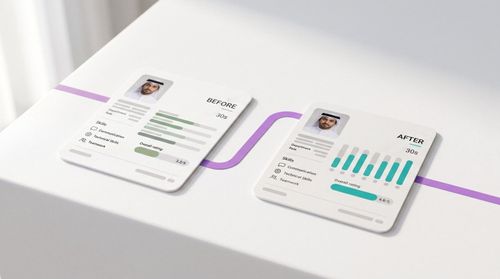
Employee training programs in Saudi Arabia compared by price, results, and ROI. Discover the best option for your organization today.
6 Min Read

Article
Saudi Arabia’s private sector in 2026 is moving fast, but not gently. It is being pulled in two directions at once: compliance pressure on one side, and massive Vision 2030 growth on the other. If you run a private company in the Kingdom, training is no longer a nice extra. It is the engine under the hood
7 Min Read

Article
When you’re browsing a training catalog, most courses look like they belong to the same family: expert trainer, polished slides, neat agenda, certificate at the end. But the real difference often shows up later when your employee tries to use that certificate in a tender, a professional license renewal, or a government support program… and suddenly, the paper in hand is not enough. So, which one should you choose: accredited courses or non-accredited courses?
7 Min Read